
Key takeaways from PRmoment's GEO conference
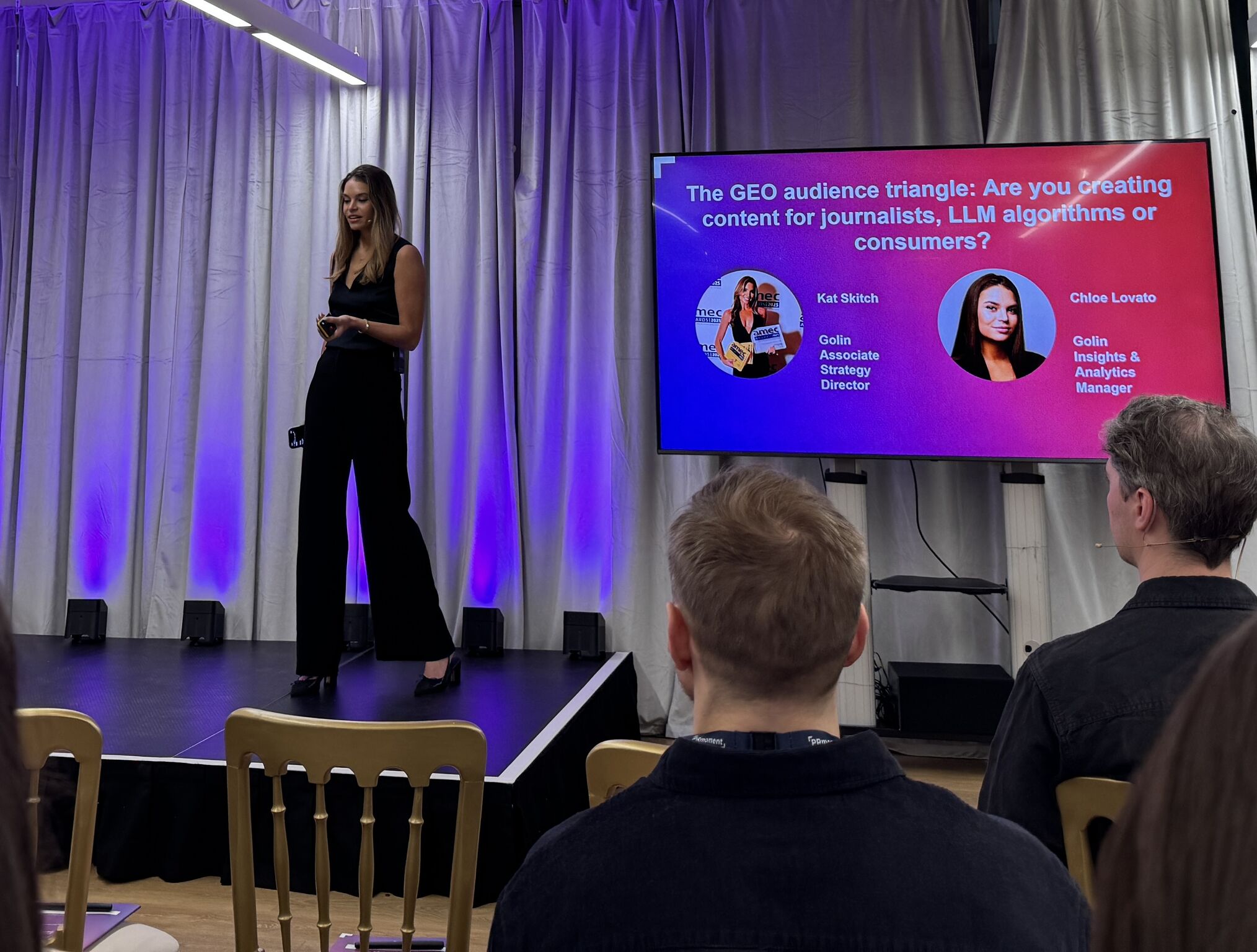
Earlier this year we spent a day at PRmoment's GEO conference, getting our heads around what generative AI means for PR and communications.
A few numbers that stood out:
- 89% of B2B buyers use ChatGPT at some point in their purchasing journey (Forrester)
- Visitors arriving from an LLM convert at three to six times the rate of other traffic
- AI referrals to purchase were up 640% on Black Friday
- 90% of AI visibility is driven by earned media citations – yet right now, a third of all AI citations globally come from just six websites
LLMs are drawing on press coverage, press releases, trade publications, LinkedIn, Wikipedia – and cross-referencing it against what your own website says. The brands showing up in AI are the ones who've consistently invested in building a credible media presence.
Every time a new algorithm has emerged – Google, social, SEO – agencies have found ways to game it, quality has suffered, and the platforms have caught up. The brands that came out ahead are the ones with a consistent, credible history of genuine earned coverage. GEO looks like it'll follow the same pattern.
Kerry Parkin from The Remarkables reframed this as a boardroom issue, not a comms manager problem. AI is often the first source of information someone reaches for — in a buying decision, in a crisis, in due diligence. It arrives before your communications team does. Current AI accuracy sits at around 82%, which means roughly one in five things it says about your brand could be wrong.
Rob Waugh from Press Gazette raised something the industry isn't really addressing yet. The whole GEO proposition rests on a healthy supply of authoritative independent earned media – but the outlets that index most strongly with AI, credible specialist and trade titles, are also under the most financial pressure. It's a circular problem worth watching.
Our main takeaway: GEO isn't a pivot away from what good PR does. It's a validation of it. Brand authority, earned media, consistent narrative – these are what AI platforms draw on.
Our caution would be against pivoting too hard toward any single tactic. The rules governing what AI surfaces are changing constantly. What isn't changing is that credibility, built through genuine earned media over time, is the foundation everything else sits on.

.jpg)
